
Handheld Rubber Tack Tester | Tackiness Checker™ | 236-HTC-1

Handheld Rubber Tack Tester | Tackiness Checker™ | 236-HTC-1
Applications: Rubber / Determination of tackiness
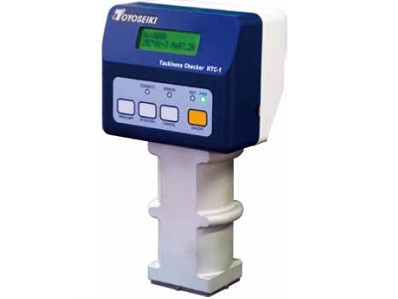
Il Tackiness Checker HTC-1 è uno strumento pratico e facile da usare che è stato sviluppato per consentire un test in loco della tackiness di componenti in gomma. Lo strumento può anche essere usato per testare la tackiness di nastri adesivi, a seconda dell’applicazione.
Verificare la tackiness dei componenti è un passaggio di fondamentale importanza nei processi di vulcanizzazione e stampaggio di pneumatici e nastri. Questi processi prevedono l’unione multistrato di elastomeri e materiali di rinforzo. Il Misuratore di Tackiness HTC-1 si rivela uno strumento essenziale, offrendo una metodologia semplice e portatile per eseguire prove accurate in loco prima della finalizzazione del prodotto.
Caratteristiche:
• Portabilità: apparecchiatura compatta e di peso ridotto (1,3 kg).
• Verifica della tackiness di campioni in ambito produttivo.
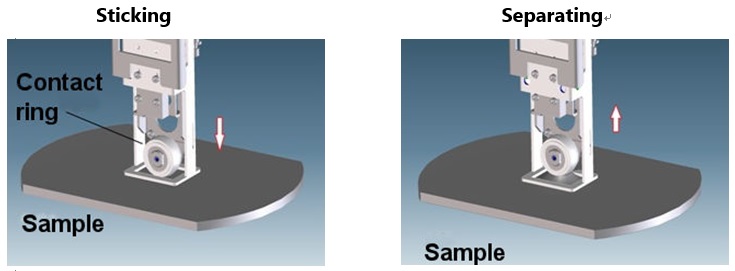
• Svolgimento della prova: semplice pressione del gruppo di misurazione sui campioni.
• Rotazione dell’anello di contatto per ogni prova.
• Pulizia agevole dell’anello di contatto (modalità pulizia).
• Misurazione della temperatura superficiale campione (opzionale).
| Model | HTC-1 |
| Load cell | Max. force 20N |
| Resolution | 0.1N |
| Press force | 5 to 12N (variable) |
| Press time | 3 sec. / 6 sec. (selectable) |
| Number of measurements | 1, 3, 5 (selectable) |
| Test speed (contact ring moving speed) | Approx. 2.3mm/sec. |
| Time required for measurement | Approx. 7 sec. (when the press time is 3 sec.) |
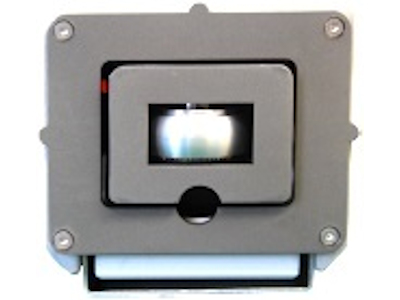
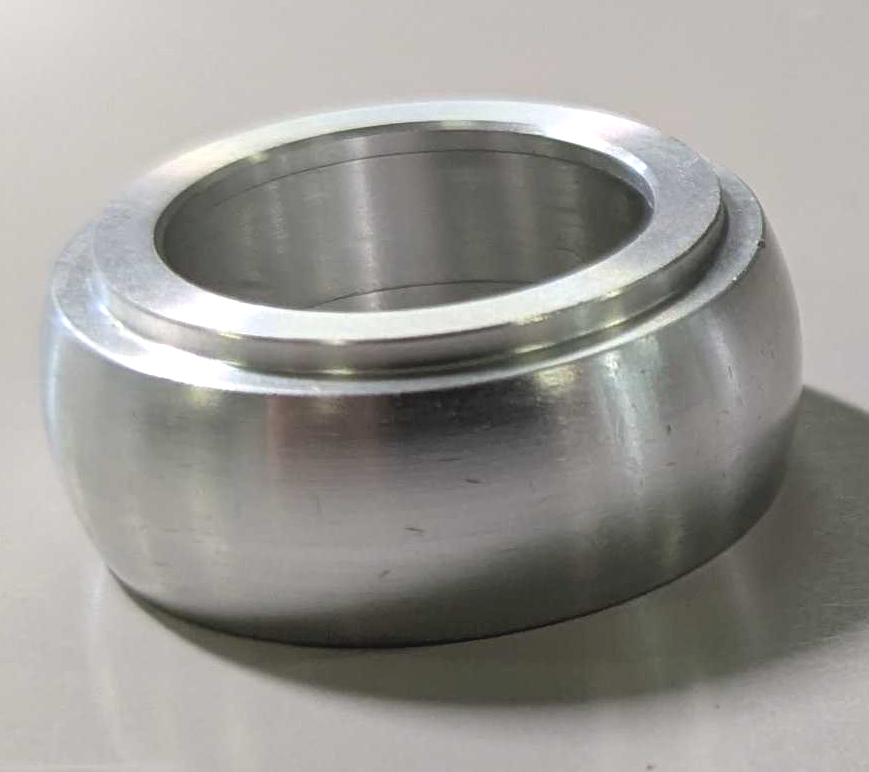
| Contact ring (probe) | • Aluminum R / curvature surface ring (AL-R1, standard)
• Aluminum F / flat surface ring (AL-F1, option) • Flat-faced indenter (AL-M1, option) • Auto rotation by ratchet mechanism |
| Minimum specimen size | 50 × 50mm |
| LCD dispay | 16 characters, 2 lines |
| Display content | • Specimen name (4 digits)
• Results (median and average for multiple measurements) • Number of measurements (1, 3, 5) • Press time (3 sec. / 6 sec.) |
| Power supply | Lithium-ion battery 7.4V, 2000mA |
| Dimensions | W118 × D72 × H222mm |
| Weight (approx.) | 1.3kg |
Options
| Nome | Code | Foto |
| Sensore di temperature a termopila integrato per rilevamento radiativo | ST-1 | |
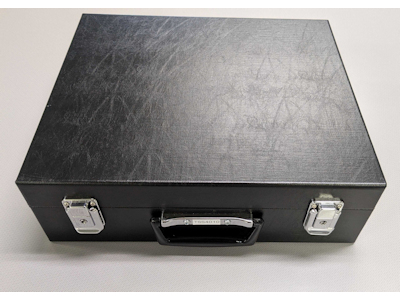
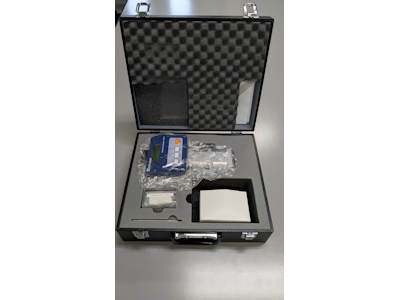
| Custodia di trasporto | KS-1 | 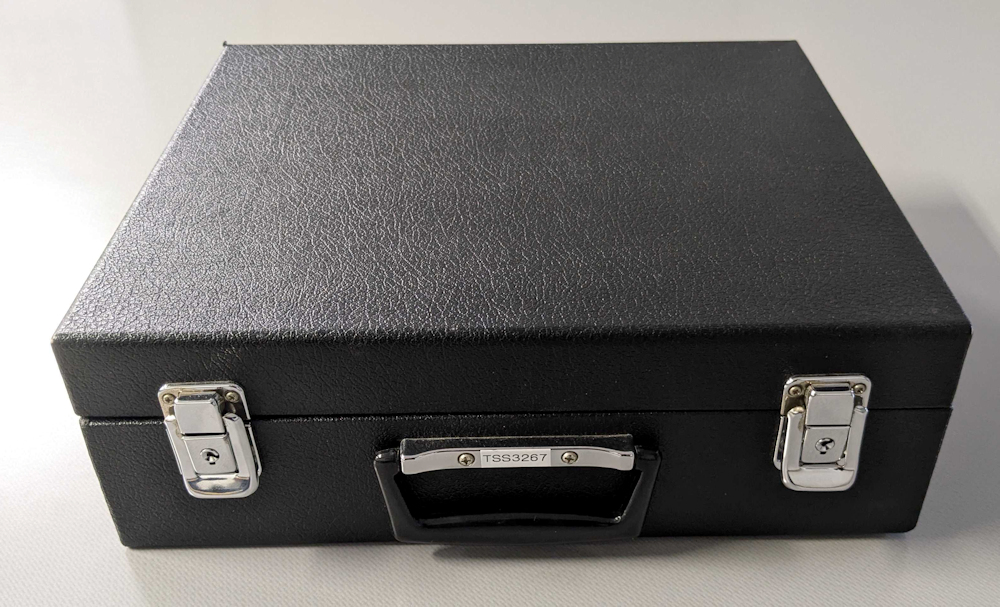 |
| Anello F in Alluminio / superificie piana | AL-F1 | 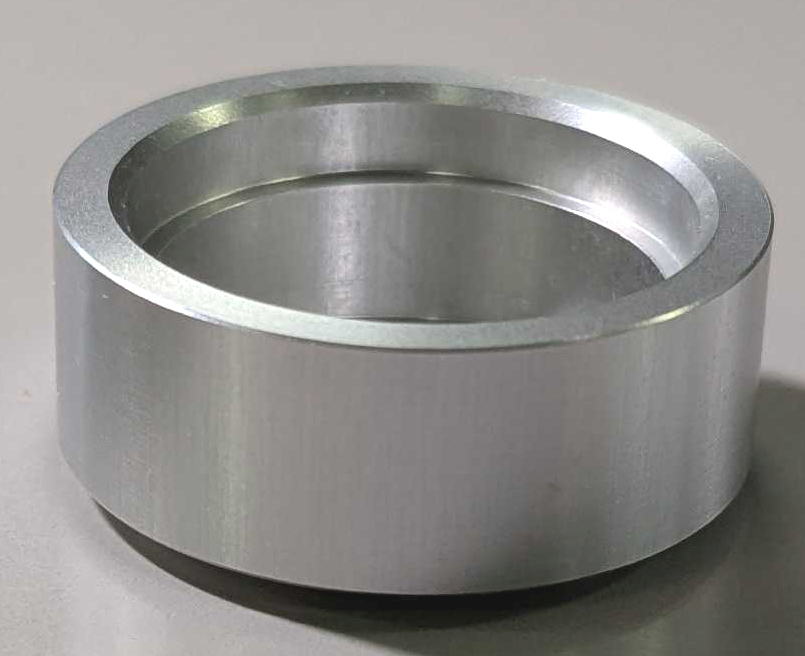 |
| Penetratore a faccia piana | AL-M1 | 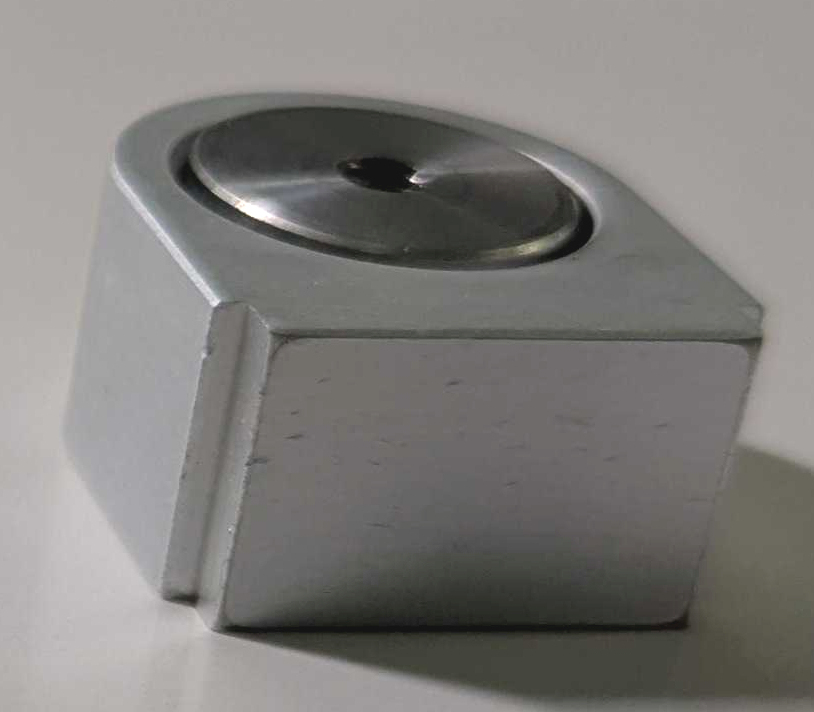 |
Selection of the contact ring (probe)
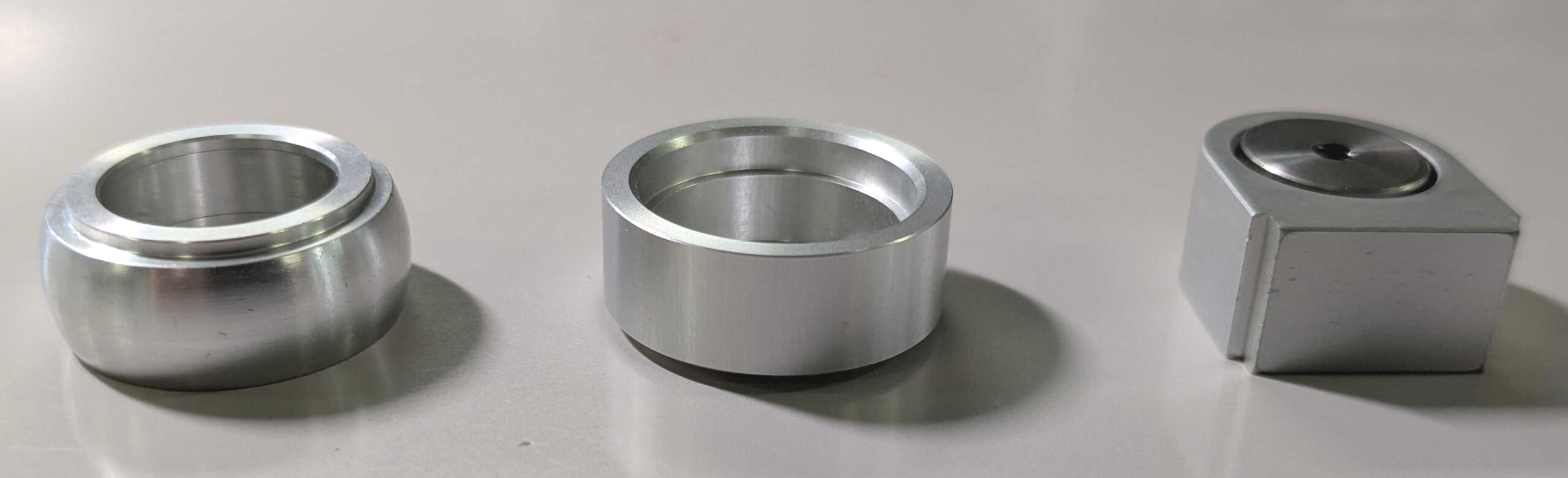
Left: Aluminum R ring (AL-R1), Middle: Aluminum F ring (AL-F1), Right: Flat-faced indenter (AL-M1)
| Name | Code | Description |
| Aluminum R ring | AL-R1 | • Standard contact ring
• The contact surface is curved in the X and Y directions. • The R shape (round shape) of the probe can flexibly negotiate itself with a certain level of projections and recesses on the test specimen, enabling averagely stable measurement. |
| Aluminum F ring | AL-F1 | • Optional contact ring
•This ring is used to measure a test specimen the tackiness of which is too low for the aluminum R ring to identify the measurement data. •The F ring results in higher measurement data than the R ring because the contact surface of the F ring is larger than that of the R ring. |
| Flat-surface indenter | AL-M1 | • Optional indenter
• 10 × 15mm² flat contact surface area • This option provides a larger contact surface area than with R or F rings, and is characterized by a flat contact surface. • It is particularly effective in cases where tack values obtained with R or F rings are low. However, it is not suited to specimens with rough or curved surfaces, because even contact will not be achieved, leading to unstable tack values. |
Related Products
 Rubber Tack Tester / PICMA Tack Tester™ | 235-P-3
Contact
-
Inquiries from the web
Contact Form -
Inquiries by telephone