
Handheld Rubber Tack Tester | Tackiness Checker™ | 236-HTC-1

Handheld Rubber Tack Tester | Tackiness Checker™ | 236-HTC-1
No applicable standard(s)
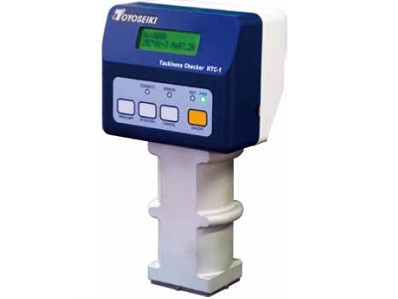
The Tackiness Checker™ is a convenient, easy-to-use instrument that was developed to allow on-site testing of the tackiness of rubber components.
This instrument may also be used to test the tackiness of adhesive tapes, depending on the application.
In the molding process of tires and belts, where components including rubber and reinforcement materials are bonded in multiple layers and vulcanized, it is very important to check the component tackiness before the forming process is completed.
The Tackiness Checker HTC-1 provides a simple and portable method for accurate, on-site testing.
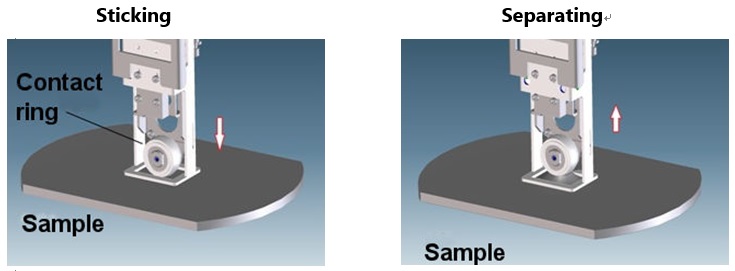
| Model | HTC-1 |
| Load cell | Max. force 20N |
| Resolution | 0.1N |
| Press force | 5 to 12N (variable) |
| Press time | 3 sec. / 6 sec. (selectable) |
| Number of measurements | 1, 3, 5 (selectable) |
| Test speed (contact ring moving speed) | Approx. 2.3mm/sec. |
| Time required for measurement | Approx. 7 sec. (when the press time is 3 sec.) |
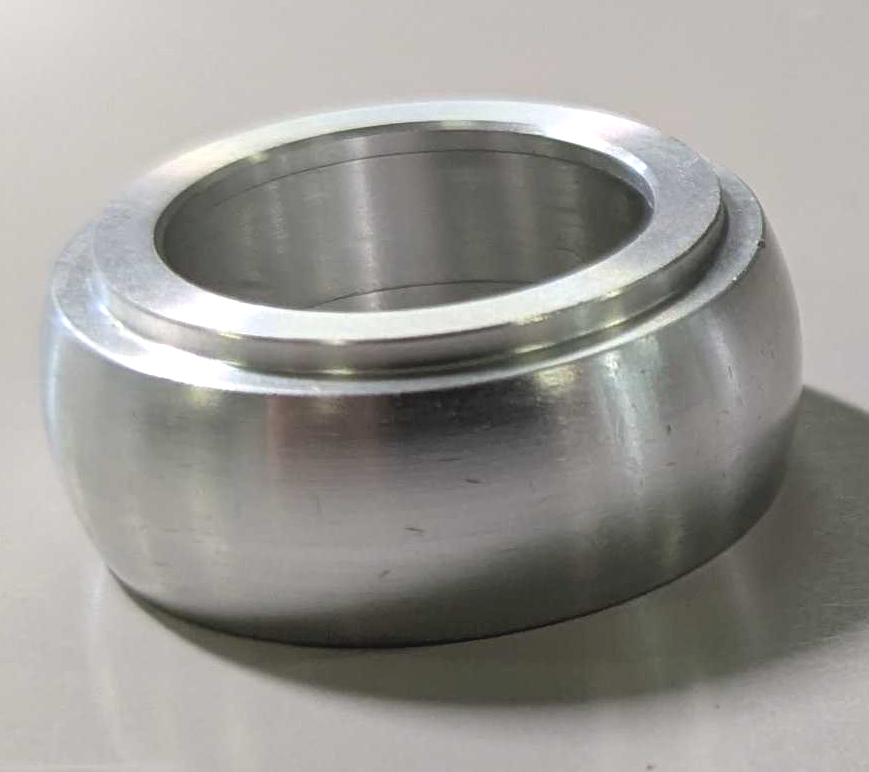
| Contact ring (probe) | • Aluminum R / curvature surface ring (AL-R1, standard)
• Aluminum F / flat surface ring (AL-F1, option) • Flat-faced indenter (AL-M1, option) • Auto rotation by ratchet mechanism |
| Minimum specimen size | 50 × 50mm |
| LCD dispay | 16 characters, 2 lines |
| Display content | • Specimen name (4 digits)
• Results (median and average for multiple measurements) • Number of measurements (1, 3, 5) • Press time (3 sec. / 6 sec.) |
| Electrical | Li-ion battery 7.4V, 2000mA
AC adapter: -Input voltage: Single-phase, AC100-240V, 50/60Hz -Output voltage: DC8.4V 2A |
| Dimensions | W118 × D72 × H222mm |
| Weight (approx.) | 1.3kg |
Options
| Name | Code | Photo | Description |
| Built-in thermopile radiated temperature sensor | ST-1 | • Measurement range: 5 to 40°C • Resolution: 1°CNote: This sensor is adjusted to the radiation rate of rubber (≅0.95)Temperature of materials with a different radiation rate cannnot be correctly measured. |
|
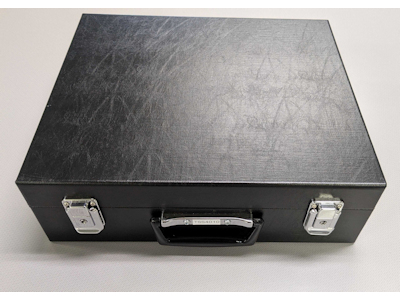
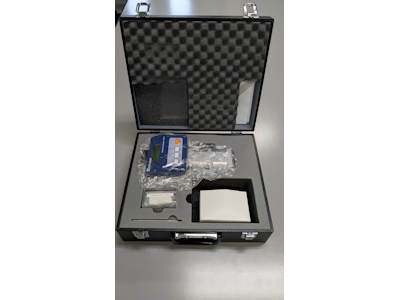
| Carrying case | KS-1 | 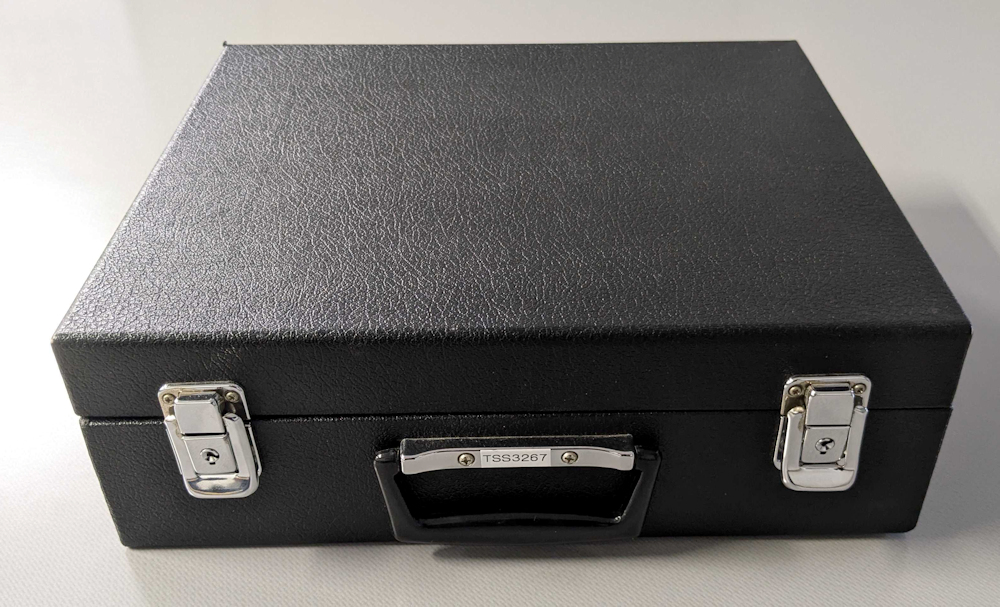 |
|
| Aluminum F / flat surface ring | AL-F1 | 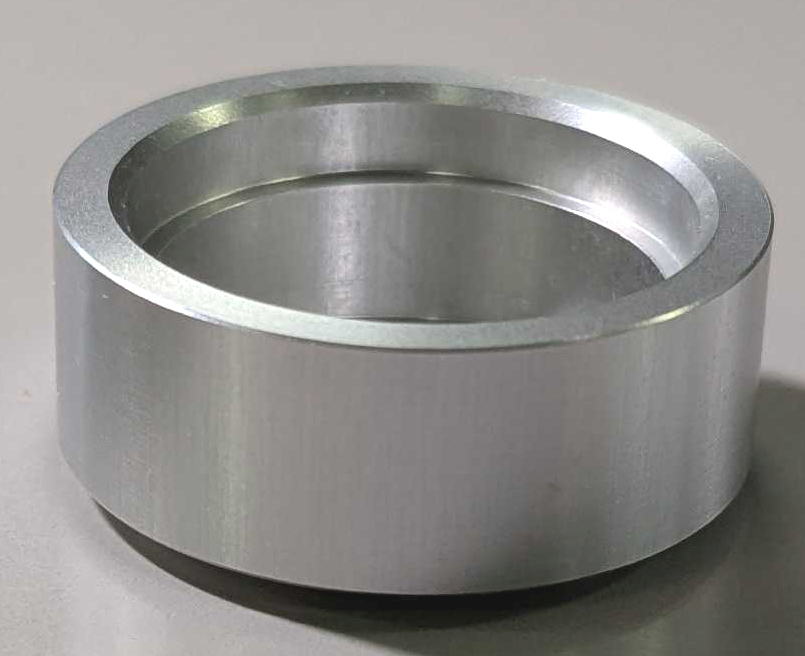 |
• Point contact
• Larger contact area than aluminum R ring. • Applicable to specimen with low tack values. |
| Flat-faced indenter | AL-M1 | 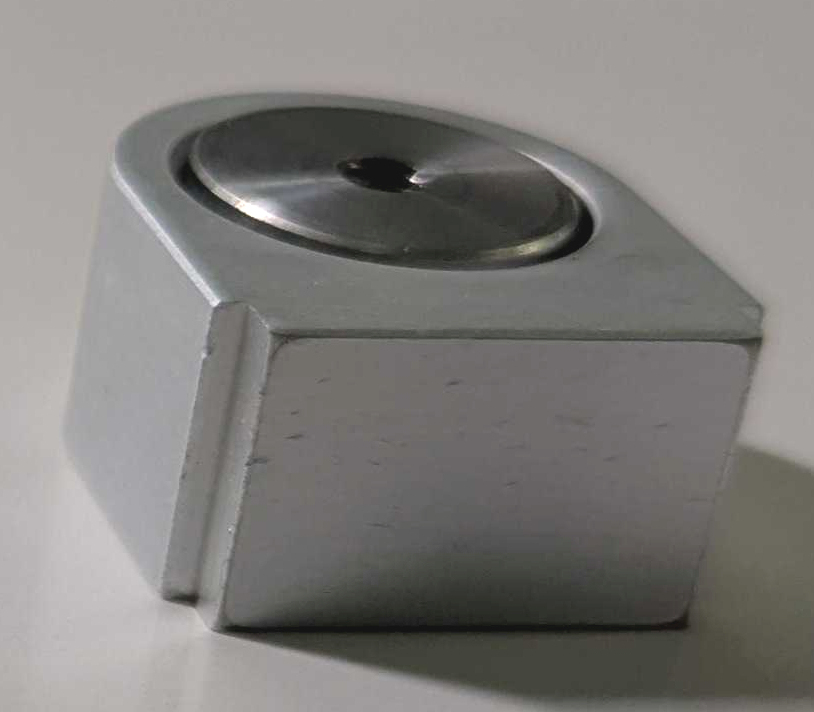 |
• Face to face contact
• Applicable to specimen that is difficult to measure even with the Aluminum F / flat surface ring Note: Ratchet mechanism is disabled. |
Selection of the contact ring (probe)
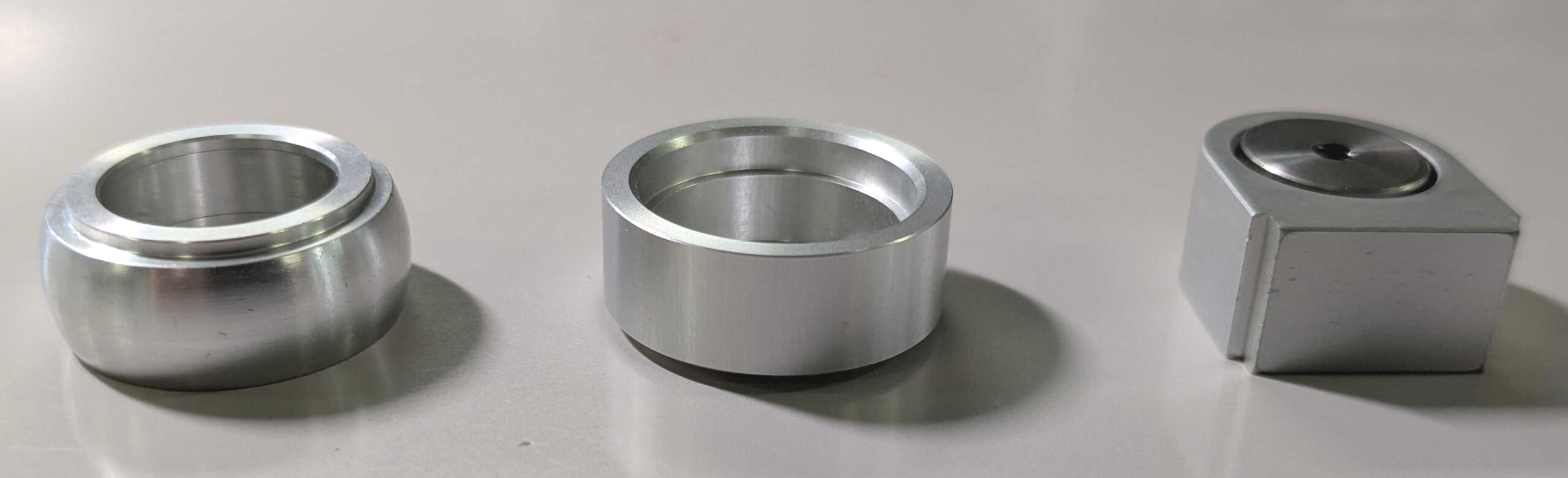
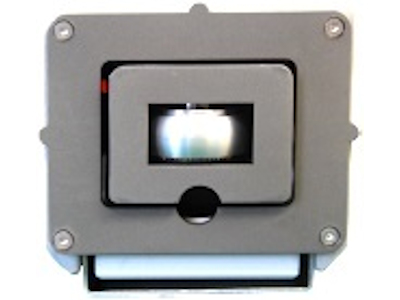
Left: Aluminum R ring (AL-R1), Middle: Aluminum F ring (AL-F1), Right: Flat-faced indenter (AL-M1)
| Name | Code | Description |
| Aluminum R ring | AL-R1 | • Standard contact ring
• The contact surface is curved in the X and Y directions. • The R shape (round shape) of the probe can flexibly negotiate itself with a certain level of projections and recesses on the test specimen, enabling averagely stable measurement. |
| Aluminum F ring | AL-F1 | • Optional contact ring
•This ring is used to measure a test specimen the tackiness of which is too low for the aluminum R ring to identify the measurement data. •The F ring results in higher measurement data than the R ring because the contact surface of the F ring is larger than that of the R ring. |
| Flat-surface indenter | AL-M1 | • Optional indenter
• 10 × 15mm² flat contact surface area • This option provides a larger contact surface area than with R or F rings, and is characterized by a flat contact surface. • It is particularly effective in cases where tack values obtained with R or F rings are low. However, it is not suited to specimens with rough or curved surfaces, because even contact will not be achieved, leading to unstable tack values. |
Related Products
 Rubber Tack Tester / PICMA Tack Tester™ | 235-P-3
Contact
-
Inquiries from the web
Contact Form -
Inquiries by telephone