
Modular Torque Rheometer | Labo Plastomill™ | 655
Modular Torque Rheometer | Labo Plastomill™ | 655
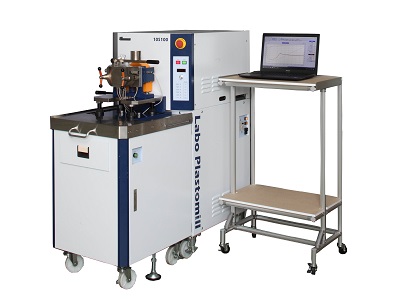
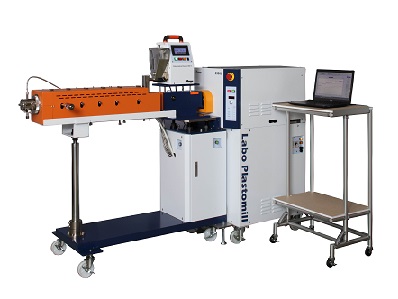
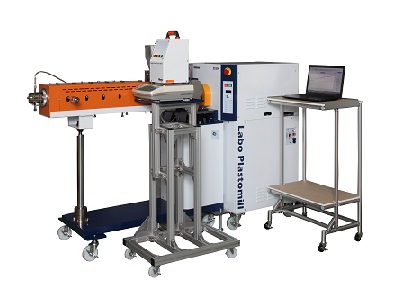
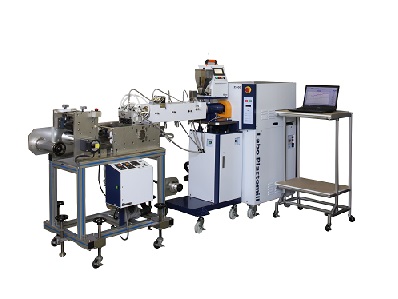
Measuring Mixers & Extruders System
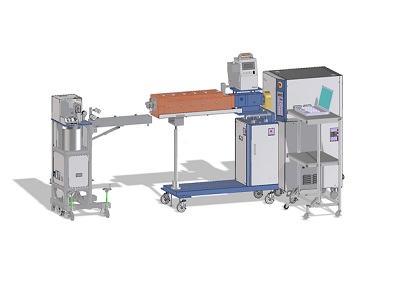
The Labo Plastomill™ incorporates small size mixer and extruder and is used to evaluate prosessability i.e. mixing, extruding, gelation, dynamic thermal stability, etc. of plastics and rubber, etc.
Knowing processing characteristics of polymer materials such as thermoplastic resins, thermosetting resins and elastomers is very important for cost reduction and quality control.
In developing of new materials in addition to knowing the processing characteristics it is also important to find out through simulation whether the material can be molded or not and determine appropriate processing conditions.
|
This Labo Plastomill perform these tests on small quantities of samples, mainly the following tests. • Processing characteristics evaluation test by small mixer (30 to 90cm³) • Simulation and other evaluation tests by small extruder (Ø20mm) The Labo Plastomill is a practical testing machine (shear force acts) which provides many reliable information necessary for molding process and is already being used in numerous industries and related fields for this purpose. |
Base Units (Drive Units)
The computer controls the machine and performs data processing of various characteristic values taking torque, resin temperature and pressure as parameters.
All controls and data processing are performed by computer. By recalling already registered testing conditions, filling sample and then starting the machine, waveform graphs of torque, pressure, resin temperature and energy, etc. are displayed and measurement proceeds according to the testing conditions.
In mixer test, programmed control operation of temperature and revolution is also possible.
In addition to allowing enlargement and reduction of waveform graph, data analysis processes the function of computing characteristic values of various patterns separately for each mode and allows multiplotting of up to 8 data.
Characteristic value points can be arbitrarily specified form waveform graph and in mixer test automatic detection by automatic calculation function is also possible.
| Model | 3S500 | 10S100 | 3S150 |
| Drive output | 15kW | 5.5kW | 3.5kW |
| Max. torque | 300Nm | 1000Nm | 300Nm |
| Max. speed | 500rpm | 100rpm | 150rpm |
| Power supply | Three-phase, AC200V, 50/60Hz, 34.6kVA (or specify) | Three-phase, AC200V, 50/60Hz, 20.8kVA (or specify) | |
| Dimensions | W525 x D660 x H950mm |
||
| Weight (approx.) | 285kg | 235kg | 215kg |
Measuring Mixers
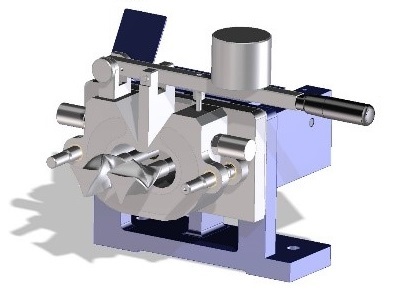
Mixer heating block, that is the sample kneading part of Labo Plastomill, contains 2 kneading blades rotating in same direction or two kneading blades rotating in different directions and resin temperature sensors.
Mixing and kneading of sample filled in the mixer proceeds as it receives heat and shear from the blade and its state of melting, dispersion, distribution, steadiness, deterioration, curing reaction, cross-linking, heat generation, etc. changes in various forms according to the characteristics of the sample.
Since these changes in state appear as change in the torque acting mechanically on the blade, the behavior of torque and resin temperature are continuously detected and displayed on the monitor.
In mixer test, processing characteristics such as gelling characteristic, dynamic thermal stability, curing characteristic, dispersion characteristic, etc. can be determined as index.
Moreover, since mechanically provided energy (MH/m3) consumed per unit volume is calculated, information regarding mixer scale up and comparison among samples can also be obtained. The middle size mixer (100cm3 or larger) is generally used to collect large quantity of kneaded substances as secondary sample in addition to conducting above-mentioned tests.
Click here for measuring mixers details
Measuring Extruders
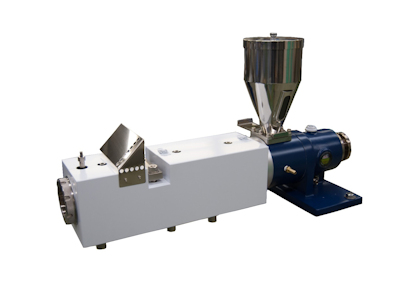
In small size extruder test of Labo Plastomill, in addition to detecting torque, the pressure and temperature (maximum 4 points each) are also continuously detected during molding by installing resin temperature sensor and resin pressure sensor in the cylinder or die and the values are displayed on the monitor.
Various kinds of molding dies and take-off devices are also available, allowing you to determine molding conditions by simulating and obtain various information such as pressure, temperature, torque, specific energy (MJ/m3) and extrusion amount at each rpm (each shear rate) in addition to detecting mold status such as extrusion mold product’s fish eye, dispersion, transparency and gloss by using a small quantity of sample.
Click here for measuring extruders details
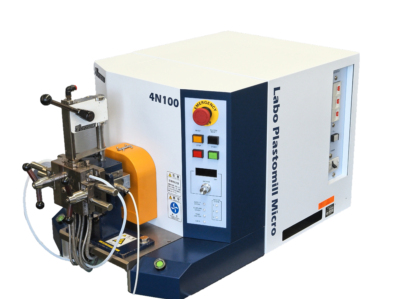 Mini-Torque Rheometer | Labo Plastomill™ Micro | 666
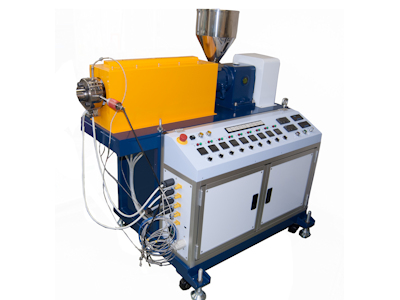 Stand-alone Single-screw Extruder | 675
Contact
-
Inquiries from the web
Contact Form -
Inquiries by telephone